

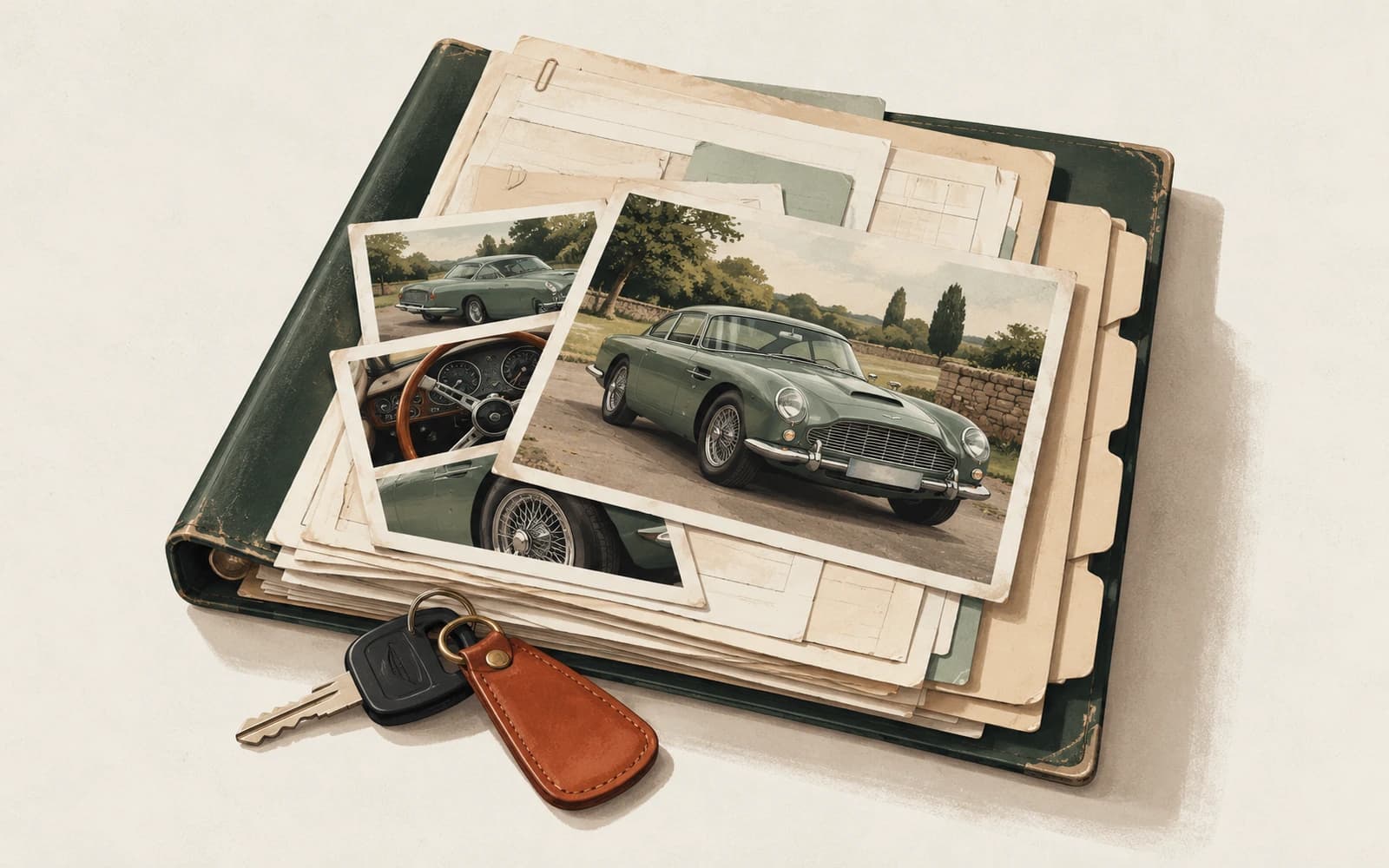
A useful history folder lets a buyer follow the car's maintenance without you having to explain every sheet from memory. Put it together before writing the advert, while you still have time to find the invoice tucked into an email or the service book on a shelf.
You are organising the evidence you have. A polished folder should make the history clearer, including its gaps.
Start with a simple chronology
Gather service invoices, repair receipts, MOT records and any relevant manufacturer-held history you can legitimately access. Sort them by date and check that each item belongs to the vehicle.
Separate completed work from quotes and recommendations. Keep the useful original documents, but do not let an unaccepted estimate imply that a large job was finished. If you have recorded DIY maintenance, keep it clearly labelled with supporting receipts.
Make important work easy to find
Create a short index of significant jobs with their dates and mileage. Point each entry towards the supporting document rather than repeating an unsupported description from an earlier advert.
For a substantial repair, include the invoice and any useful related documentation. If the work was limited, describe its actual scope. "Engine work" should not become "rebuilt engine" because the latter looks better in a summary.
A digital timeline can help you find the evidence, but check what you are able and willing to share. Your own notes, an independent garage invoice and a manufacturer record have different sources.
Keep the MOT record in context
Use the official MOT history service to review available test results. If an advisory led to an inspection or repair, keep the later evidence beside the original finding.
A subsequent pass does not tell a buyer which parts were replaced. Let the repair documentation do that job where it exists. Keep outstanding issues visible rather than presenting a tidy folder as proof that nothing remains to be done.
Describe gaps plainly
If a period has no supporting paperwork, say so. A useful explanation identifies the missing dates and what evidence you do have. Avoid guessing a service interval or attributing undocumented work to a previous owner as though it were established fact.
Our guide to recovering missing history may help before you sell. If a record cannot be recovered, a clear account of the gap is more helpful than a confident reconstruction.
Check for personal information
Review documents before giving copies to a prospective buyer or posting images publicly. Look for home addresses, contact information, payment details and previous owners' information. Share only what is needed, using appropriately redacted copies where necessary.
Keep originals secure and explain any redactions when they matter to understanding the evidence. Do not publish identity documents, private correspondence or account access details as part of proving a car's history.
Make the handover manageable
Check that the folder matches the description in your advert and that you can locate the documents a buyer is likely to ask about. Keep a record of what you hand over and retain appropriate copies of your own transaction paperwork.
In Carstoric, you can organise entries and attachments in the maintenance log and export your garage through Settings. Prepare the relevant material carefully; a garage export may contain records for other vehicles too.
The result should be easy to follow: what happened, when it happened, who did the work and where the evidence is. That is useful to a buyer without promising any particular sale price.