

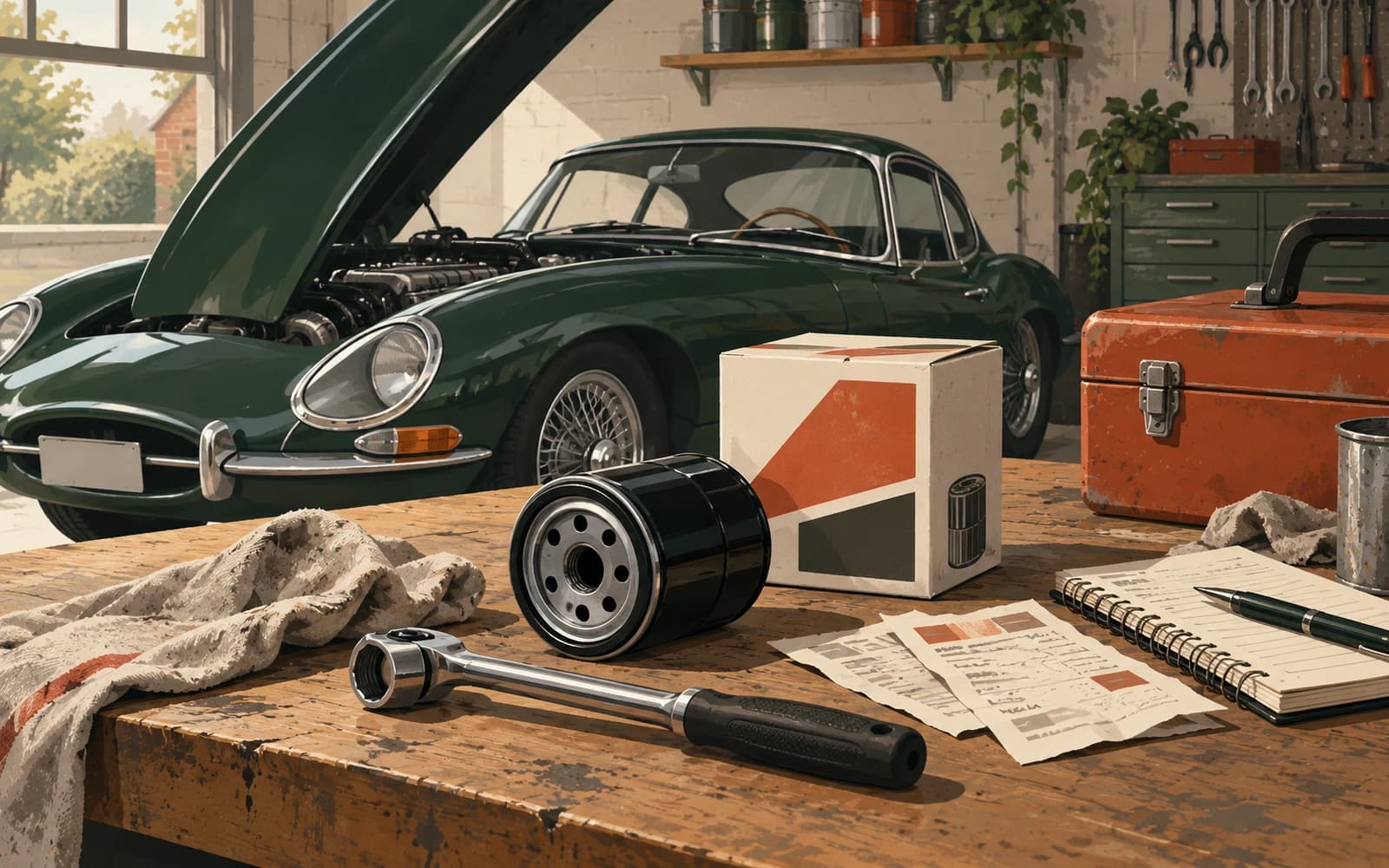
Finishing a job on your own car is satisfying. Before the tools go away, spend a few minutes recording it. Months later, you will want to know which part you fitted, what specification the fluid met and whether the job was completed or still needed checking.
A useful DIY record can be simple. It should identify the work and preserve the evidence without presenting it as a garage service or a professional inspection.
Record the job while it is fresh
Note the date, odometer reading and units, the work completed and who carried it out. Give the entry a title that will make sense in a list later. "Front wiper blades replaced" is easier to find than "Saturday jobs".
Describe the actual scope. Replacing engine oil and a filter does not establish that every item in a scheduled service was checked. If a job is unfinished, record what remains and keep it on your outstanding list.
Keep the parts details
Save the receipt and relevant part numbers. For fluids, retain the specification and quantity actually used where you can document them. A generic label such as "fully synthetic" may not answer the question your next service raises.
Keep the information in context. A photograph of packaging shows the product you recorded, but it does not independently prove the quality of the work. A torque figure copied into your notes is not evidence that it was applied correctly.
Use the manufacturer's procedure and appropriate technical information for the vehicle. This record-keeping guide is not a repair method. If the work involves a safety-critical system or is beyond your equipment and experience, get qualified help.
Take photographs with a purpose
A few clear photographs can document the parts, a visible condition or an area before reassembly. Choose images that will help someone understand the job rather than keeping dozens of nearly identical pictures.
You do not need to recreate a repair for a photograph. Keep safe working arrangements in place and take pictures only when doing so is appropriate. Do not let a need for evidence distract you from the work itself.
Separate work from diagnosis
Record the reason for the job and what you observed afterwards. "Replaced the wiper blades because the driver's side was streaking" gives useful context. If the original problem remains, say so.
Do not describe a fault as solved simply because you fitted a new part. A record can show the work completed and leave the outcome open until it has been established. That honesty helps when a garage later needs to investigate the same concern.
Keep the distinction clear for future readers
Label the entry as DIY and keep the original receipts. If a professional subsequently inspected or corrected the work, preserve that separate finding with its date and scope.
Where a warranty, finance agreement or other arrangement is relevant, check its requirements before undertaking work. Do not assume your own notes satisfy every provider's evidence or servicing conditions.
Make recording part of finishing
Before you close the garage, add the entry, attach the supporting documents and note any follow-up. Keep costs based on the receipts rather than guessing from memory.
Our service-record checklist sets out the basic details worth keeping. In Carstoric, completed work belongs on the vehicle timeline, while unfinished jobs can stay in issues or to-dos. The next time you need the part number, you will know where to look.